
Last Updated: November 21, 2026
Quick Summary
A reliable used film camera store online tests each body, grades condition clearly, and offers a return window, which a marketplace rarely provides. Stores take possession, inspect, and resell, so you get a camera someone has already checked rather than a listing photo and a stranger’s rating.
- Specialist film stores offer tested gear and honest functional grades but limited stock and higher prices.
- Condition grades are not standardized, so always read the store’s own definition before buying.
- Fire the shutter at every speed and listen, because identical sounds mean the timing is likely stuck.
- Check the return window length, who pays return shipping, and whether functional faults are covered.
- Keep every marketplace transaction on the platform, since off-platform deals remove buyer protection.
Table of Contents
- What Separates a Reliable Used Film Camera Store Online From a Marketplace
- Quick Comparison of Top-Rated Online Stores for Used Film Cameras
- What Used Film Camera Condition Grades Actually Mean
- How to Inspect a Used Film Camera Before You Commit
- Why Tested Used Film Cameras Command a Higher Price
- Inventory Variety and Reliability: Pros and Cons of Each Store Type
- Return Policies and Buyer Protection to Check Before Ordering
- What to Look for When Buying Used Analog Gear
- Start Your Search on Kameratalk
- Frequently Asked Questions
What Separates a Reliable Used Film Camera Store Online From a Marketplace
Buying a used film camera online is a gamble unless you know who is actually checking the gear before it ships. A reliable used film camera store online usually tests each body, grades condition clearly, and offers a return window, which are features a marketplace rarely provides.
Marketplaces connect strangers. Stores take possession, inspect, and resell. That difference decides whether you get a camera that fires at every speed or a paperweight with a nice listing photo.
Here is the core tension. Marketplaces offer the widest selection and the lowest prices, but the risk sits entirely with you. A dedicated store charges more because someone has already done the checking. Whether that premium is worth it depends on how much you value your time and how badly you want to avoid a return.
A common mistake is treating a glowing seller rating as proof of a working shutter. Ratings measure shipping speed and politeness, not whether the light meter is accurate.
If you are weighing stores against portals, our guide to buying used cameras from online portals covers the marketplace side in more depth.
Quick Comparison of Top-Rated Online Stores for Used Film Cameras
Three store types dominate the market, and each suits a different buyer. The table below sums up what you actually get from each.
| Store Type | Inventory Variety | Reliability | Best For |
|---|---|---|---|
| Specialist film stores | Narrow but deep | High, gear is tested | Buyers who want a working camera |
| Large general retailers | Very wide | High, formal grading | One-stop shopping with returns |
| Peer marketplaces | Widest | Variable, seller-dependent | Confident buyers chasing a deal |
Specialist film stores focus on analog bodies and lenses. The trade-off is typically a smaller catalogue and higher prices.
Large general retailers carry film and digital side by side. Their grading systems are formal and their return policies are generous, which makes them a safe first stop. You pay for that safety.
Peer marketplaces win on price and choice. They also demand the most homework from you, because nobody has inspected the camera on your behalf.
For a direct head-to-head between two of the biggest resale platforms, our KEH vs MPB comparison breaks down how their grading and returns differ.
What Used Film Camera Condition Grades Actually Mean
Condition grades are shorthand for how much wear a camera shows, but the labels are not standardized across stores. „Excellent“ at one retailer can mean „barely touched“ and at another „works fine, looks rough.“ Always read the store’s own definition before you buy.
Used film camera condition grades generally run from mint (like new) through excellent, good, and fair, down to parts-only. The words sound universal. They are not.
The Difference Between Cosmetic and Functional Grading
Cosmetic grading describes appearance: brassing on the edges, scratches on the baseplate, wear on the leatherette. Functional grading describes operation: does the shutter fire, does the meter read correctly, do the seals keep light out.
A camera can be cosmetically rough and functionally perfect. It can also look pristine and have a sticky shutter. The grade you care about is the functional one, and not every store separates the two.
When a listing only mentions cosmetics, ask directly about function. A store that tests its gear will answer with specifics. One that does not will send you a generic reply.
How to Inspect a Used Film Camera Before You Commit
Inspection starts before the camera reaches you and continues the moment the box opens. Read the listing for what was tested, then repeat those checks yourself within the return window. Our walkthrough on how to check if a film camera works covers the full sequence step by step.
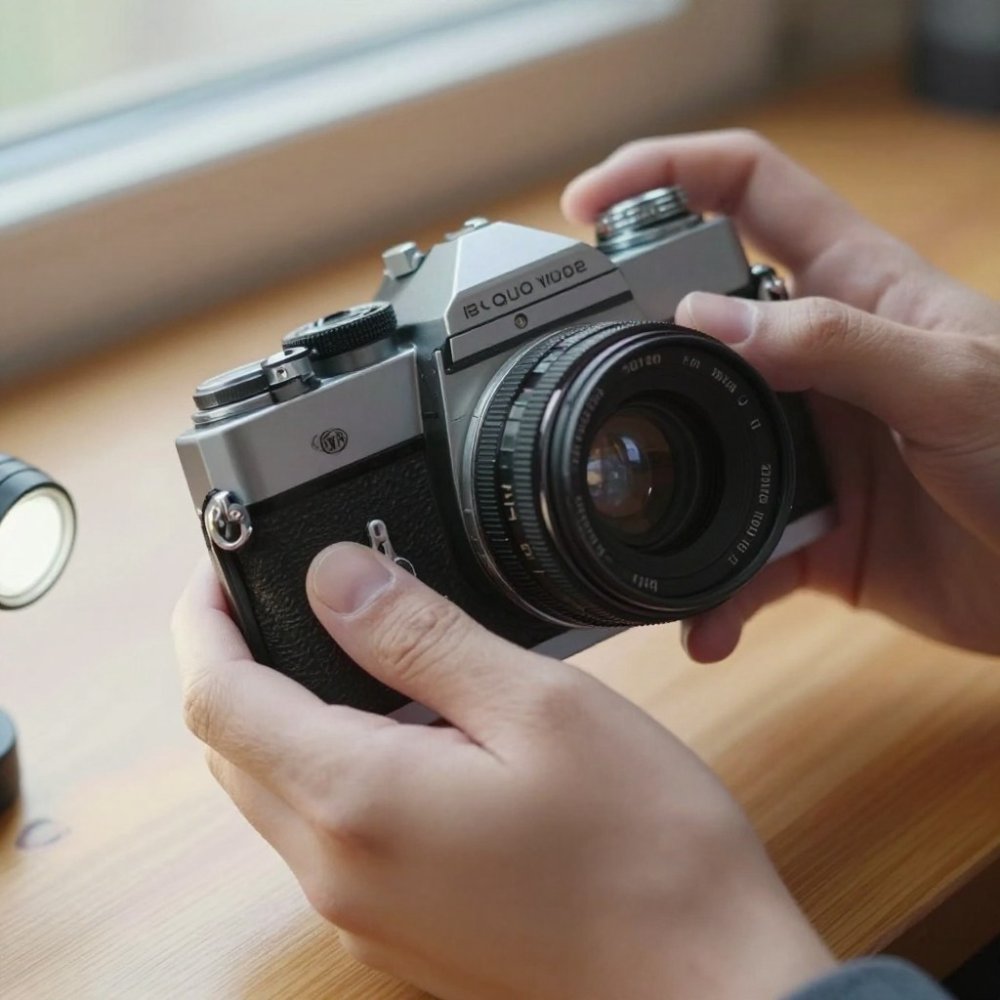
Checking the Shutter, Light Seals, and Meter
The shutter is the heart of the camera and the most expensive thing to fix. Fire it at every speed and listen. Slow speeds should sound distinct from fast ones, not identical. If every setting sounds the same, the timing is likely stuck.
Light seals are foam strips that crumble with age. Open the back and look along the edges. Crumbly black residue means the seals need replacing, which is a cheap fix but a real one.
The meter is the easiest check. Point the camera at a bright scene and a dark one and watch whether the needle or LED responds. A dead meter is common on older bodies and worth factoring into the price.
For a deeper method, our guide on how to test a used camera’s shutter speed shows practical ways to verify timing without lab equipment.
Why Tested Used Film Cameras Command a Higher Price
A tested camera generally costs more because testing takes time, since someone has to check the shutter, meter and seals before it is sold.
Whether the premium is worth it depends on your budget and how much repair risk you are willing to accept.
The math changes if you enjoy repairs or already own the tools. For everyone else, tested gear is the safer buy.
Inventory Variety and Reliability: Pros and Cons of Each Store Type
Variety and reliability pull in opposite directions. The stores with the deepest catalogues are rarely the ones with the tightest quality control, and the most careful inspectors rarely stock everything.
Specialist film stores:
- Pros: expert staff, tested gear, honest functional grades
- Cons: limited stock, higher prices, slower to list new arrivals
Large general retailers:
- Pros: huge selection, formal grading, strong returns
- Cons: film knowledge varies by location, premium pricing
Peer marketplaces:
- Pros: lowest prices, widest choice, rare models surface here
- Cons: no inspection, seller-dependent quality, disputes take time
The right pick depends on what you are buying. A common body like a Pentax K1000 is easy to find tested. A rare rangefinder may only appear on a marketplace, which means you accept more risk or wait.
Return Policies and Buyer Protection to Check Before Ordering
A generous return window is the single best safety net when buying used gear online. Check three things before you order: the length of the window, who pays return shipping, and whether functional faults are covered or only cosmetic ones.
Some stores offer a short window for any reason and a longer one for defects. Others treat a non-working shutter as a warranty issue and a scratch as final sale. Read the fine print, because „14-day returns“ can hide a lot of conditions.
Under consumer protection rules, distance sales generally come with a statutory right of withdrawal, but used goods and private sales can differ. Confirm the store’s terms in writing before you pay. If a seller will not put the policy in plain language, treat that as a warning.
Watch out: a marketplace seller who asks you to complete the deal outside the platform removes your buyer protection entirely. Keep every transaction on the platform.
What to Look for When Buying Used Analog Gear
Beyond the body, the lens and accessories decide whether a camera is a bargain or a money pit. Fungus, haze, and scratches inside a lens cost more to fix than most buyers expect, so inspect the glass carefully.
Our guide on spotting fungus in vintage lenses explains what early growth looks like and why it spreads.
A practical checklist before you commit:
- Shutter fires at every speed and sounds distinct
- Light seals are intact, not crumbly
- Meter responds to light changes
- Lens glass is clear, no fungus, haze, or deep scratches
- Aperture blades move freely and are not oily
- Film advance and rewind crank turn smoothly
- Return window and fault coverage confirmed in writing
Work through that list on every listing and you will filter out most of the bad ones before you spend a cent.
Start Your Search on Kameratalk
Finding a camera you can trust comes down to knowing what to check and who has already checked it. That is the whole game. The stores that test their gear, grade function honestly, and back it with a clear return policy are the ones worth your money.
Kameratalk focuses on analog and digital camera expertise, gear, and community, so you can ask questions and learn before you buy.
Get started with Kameratalk.
Frequently Asked Questions
Where is the best place to buy a used film camera online?
Specialist online stores that grade and test their inventory are the safest bet. Look for stores that publish used film camera condition grades, offer a return window of at least 14 days, and state whether the shutter and light meter were checked. Marketplaces can work for rare models, but you carry more risk because inspection and returns depend on the individual seller.
What should I check before buying a used film camera?
Ask about the shutter speeds, light seals, meter accuracy, and battery compartment. Request photos of the lens mount and film chamber. Confirm the store’s return policy and whether the camera was tested with a roll of film. Knowing how to inspect a used film camera before it ships saves you return shipping and weeks of waiting.
What do used camera condition grades mean?
Grades usually run from mint or like-new down to well-used or for-parts. A grade describes cosmetic wear, not necessarily function, so read the description for mechanical details. Stores that sell tested used film cameras often add a separate note on shutter accuracy and meter function, which matters more than a scratch on the baseplate.
Is it safe to buy a vintage film camera online?
It is safe when you buy from a store with clear grading, tested inventory, and a written return policy. Pay with a method that offers buyer protection, keep the listing and photos, and test the camera within the return window. Avoid sellers who refuse returns or cannot describe the shutter and meter condition.