Table of Contents
- Why Authentic Party Photos Matter
- Best Camera Settings for Party Photography
- How to Use Flash for Natural Event Photos
- Candid Event Photography Tips
- How to Photograph People Who Are Camera Shy
- Composition and Storytelling at Parties
- Working with Smartphone Cameras
- Post-Production and Gallery Curation
- Legal and Social Etiquette
- Frequently Asked Questions
Last Updated: September 23, 2026
Why Authentic Party Photos Matter
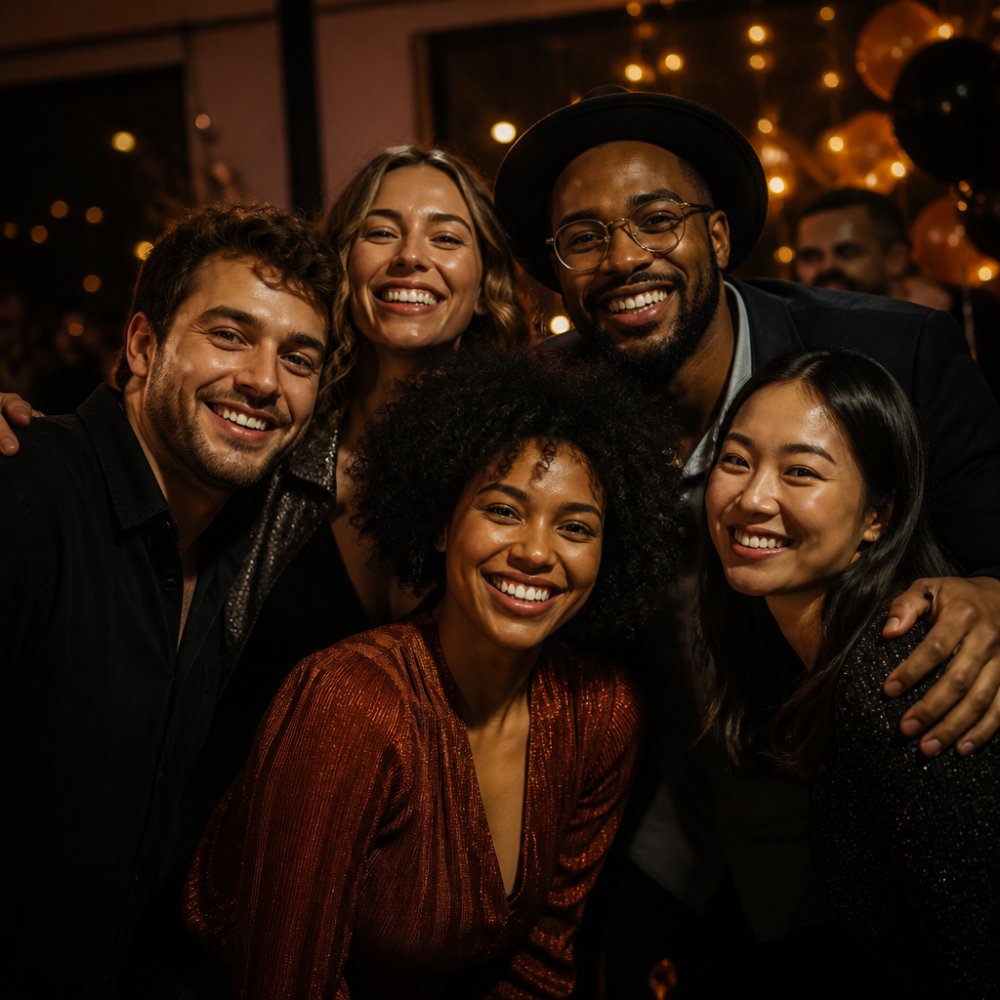
Authentic party photos capture genuine moments and real emotions, not stiff, posed shots. The challenge is balancing two goals: making people forget the camera exists while maintaining technical control for difficult lighting and fast-moving subjects. This guide covers both.
Best Camera Settings for Party Photography
Party environments demand specific technical choices. Low light, moving subjects, and unpredictable moments mean you can’t rely on automatic modes.
Shutter Speed and Motion
Use a minimum shutter speed of 1/125th of a second; push to 1/250th or higher for dancing. Faster shutter speeds require more light or higher ISO, you can’t optimize all three simultaneously.
Aperture and Depth of Field
Wide aperture (f/1.8-f/2.8) pulls in light and isolates subjects with soft backgrounds; narrow aperture (f/5.6-f/8) keeps groups and context sharp. For authentic party photos, start with f/2.0-f/4.0 for flexibility.
ISO for Low-Light Environments
Start at ISO 1600 in dim party venues; modern cameras handle this well, though smartphones perform worse at high ISO. A slightly noisy image beats motion blur, grain is fixable in post-production.
How to Use Flash for Natural Event Photos
Flash is essential at parties, but it’s also the easiest way to kill authentic moments. Direct flash creates harsh shadows and makes people look washed out.
Diffuser Techniques
Use a diffuser (dedicated or improvised with translucent material) to soften light. Point flash upward or at a wall instead of directly at people, bounced light is softer and feels less intrusive.
Balancing Flash with Ambient Light
Blend flash with ambient light using low power or fill mode. Let the venue’s existing light do most of the work while flash fills shadows and freezes motion, retaining the scene’s original color and mood for authentic party photos.
Candid Event Photography Tips
Candid moments happen when people forget you’re there. The challenge isn’t just being physically unobtrusive, it’s creating an environment where guests feel comfortable enough to relax and interact naturally, even with a camera present.
The Psychology of the Unposed Look
Position yourself near the action as a witness, not a participant. When people are engaged, talking, laughing, eating, they’re less self-conscious and authentic party photos follow naturally. Make brief eye contact and acknowledge people when noticed; this humanizes you and reduces formality.
Building Rapport Before You Shoot
Arrive early and chat with guests without a camera to learn social dynamics and build rapport. When you start shooting, people already see you as a person first, photographer second, and are less likely to stiffen.
Positioning and Movement
Position yourself at the edges, a corner, doorway, or group periphery, and move slowly between moments. Watch for natural rhythms in conversations and laughter, anticipating peaks rather than reacting after. Smartphones feel less intrusive, letting you position closer without discomfort.
Shooting in Bursts
Capture 3-5 frames in quick succession using burst mode. One of them will have the perfect expression, gesture, or moment of connection. Single shots often miss the peak, someone’s eyes might be closed, or their expression might be mid-transition.
Burst shooting also reduces the pressure you feel to get the shot in one frame. You can relax, focus on the moment, and let the camera capture the progression. This mental shift often results in better timing because you’re not tense.
Review bursts immediately after capturing them. Delete obvious misses (closed eyes, motion blur, wrong focus) to avoid culling hundreds of images later. Keep 1-2 of the best frames from each burst.
Staying Unobtrusive Without Being Invisible
There’s a balance between being present and being intrusive. You want to be visible enough that people know you’re documenting (so there are no surprises when photos appear later), but unobtrusive enough that they forget about the camera and relax.
Acknowledge people when they notice you, but don’t engage in long conversations. Your job is to document, not participate. A brief interaction, „Thanks for letting me capture that“, is enough to build rapport without pulling you away from your role.
Never photograph someone who’s clearly uncomfortable or has declined. If someone looks away, steps back, or says they’d rather not be in photos, respect that immediately. Authentic party photos aren’t worth making guests feel violated or resentful.
If you notice someone consistently avoiding the camera, approach them during a quiet moment and ask if there’s a reason. Sometimes it’s a bad hair day or they’re self-conscious about something specific. Other times, they just prefer privacy. Understanding their concern lets you either work around it (shoot them from a distance, focus on group moments they’re part of) or respect their preference entirely.
Capturing Micro-Moments
The most authentic party photos often aren’t the obvious moments, the toast, the cake cutting, the group photo. They’re the micro-moments: someone’s hand on another person’s shoulder, a glance across a room, someone laughing so hard they’re wiping tears, the moment before a hug.
These moments are brief and easy to miss if you’re looking for the big moments. Train yourself to notice small gestures and expressions. Watch for the moments between the moments.
This requires patience and presence. You can’t be distracted by your phone or conversations. You need to be actively observing, anticipating where the next small moment might happen.
The Sequence Over the Single Shot
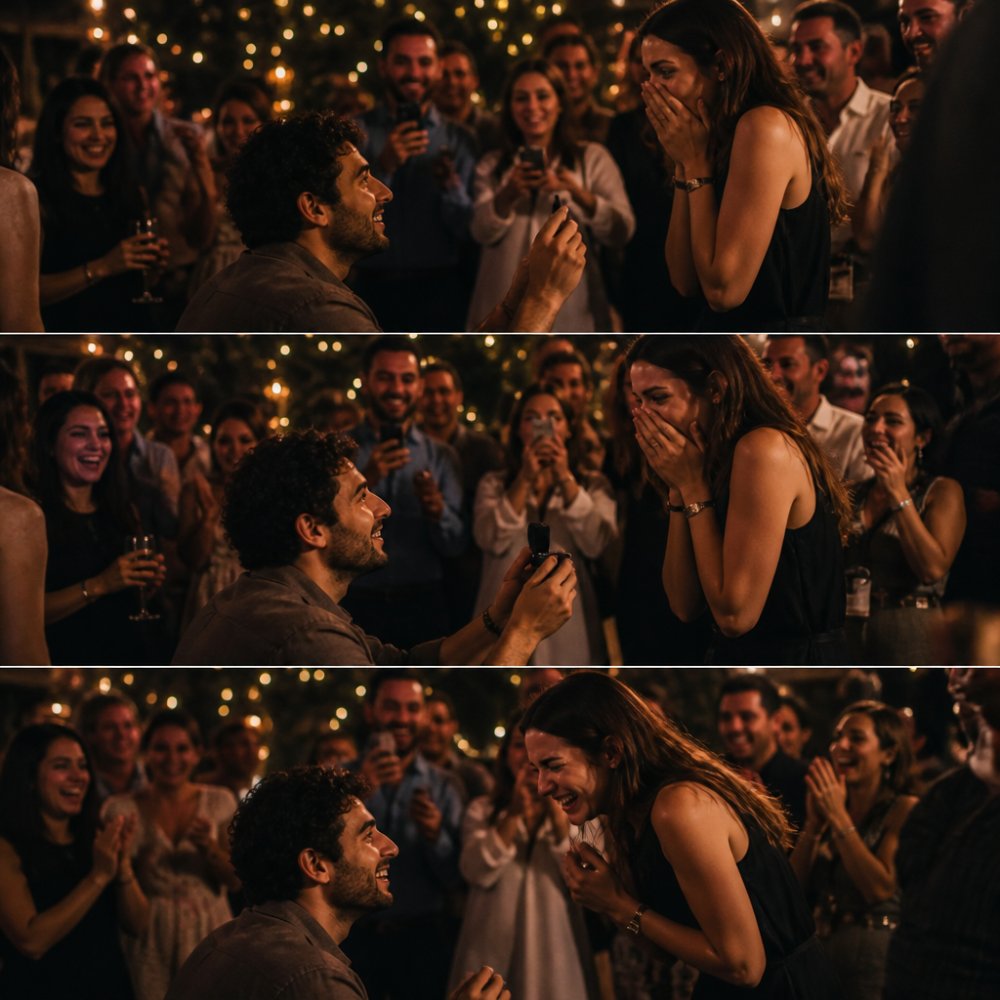
Storytelling comes from sequences, not individual images. A single candid moment is nice. Three images showing the progression of an interaction, anticipation, the moment, the reaction, tell a complete story.
When you capture a candid moment, try to get the before and after as well. If someone is about to hug another person, capture the approach, the embrace, and the moment they pull apart. If someone is telling a story, capture the setup, the peak moment, and the reaction from listeners.
Sequences also give you more material to work with during curation. If one frame in a sequence is slightly soft, you have alternatives. If the expression in one frame isn’t quite right, the next frame might be perfect.
How to Photograph People Who Are Camera Shy
Some guests actively avoid the camera. Forcing them into photos creates tension and awkward results.
Start by building rapport. Chat with camera-shy people about something other than photography. Let them see you as a person, not just someone with a camera.
Shoot from a distance. A longer focal length lets you capture genuine moments without hovering over people. They’re more likely to relax when you’re not directly in their space.
Ask permission, but frame it casually. „Mind if I grab a few shots?“ feels different from „Can I photograph you?“ The first is about capturing the moment; the second feels like a formal portrait session.
When you do photograph them, focus on their actions and interactions rather than posed portraits. People relax when they’re doing something, talking, laughing, eating. Capture them in those moments.
The psychology of the unposed look matters here. People are more comfortable being photographed when they’re engaged with someone else or an activity. They feel less self-conscious.
Composition and Storytelling at Parties
Composition at parties isn’t about perfect rule-of-thirds positioning. It’s about capturing context and emotion together.
Include environmental details. Show the decorations, the food, the venue. These elements tell the story of the specific event. A close-up of someone laughing is good. That same shot with the party backdrop visible is better, it shows where the joy is happening.
Use layering. Position subjects at different depths in the frame. Foreground, middle ground, background. This creates dimension and makes images feel more dynamic.
Watch for frames within frames. A doorway, a window, or a gap between people can create natural framing that draws the eye to your subject.
Storytelling comes from sequences, not individual images. A single candid moment is nice. Three images showing the progression of an interaction, anticipation, the moment, the reaction, tell a complete story.
Working with Smartphone Cameras
Most party photos are shot on smartphones now. The technical limitations are real, but understanding how to work within them, and leverage smartphone-specific advantages, separates sharp, authentic images from blurry, unusable ones.
Understanding Smartphone Sensor Constraints
Smartphone sensors are physically small compared to dedicated cameras. This affects how they handle three critical variables: light sensitivity, depth of field, and autofocus speed.
When light is low, smartphone cameras push ISO aggressively. Unlike larger sensors, small sensors produce visible noise at ISO 800 and above. The fixed aperture (typically f/1.5 to f/2.0 depending on the model) can’t open wider to compensate. This means you have less control over the light-gathering equation than with a dedicated camera.
Depth of field is naturally deeper on smartphones due to the small sensor and short focal length. This is both a limitation and an advantage. You can’t isolate a subject with a soft background as easily, but you keep more of the scene in focus, useful for capturing party context and atmosphere.
Autofocus on smartphones is fast but can hunt in low light. It locks onto whatever is closest or has the highest contrast, not necessarily your intended subject. Understanding this behavior prevents missed moments.
Positioning for Light
Compensate for sensor limitations by controlling where you shoot within the venue.
Identify the brightest areas: near windows (even at night, ambient street light helps), under ceiling lights, near the food or bar where task lighting is stronger, or anywhere with colored uplighting. Position yourself and your subjects in these zones when possible.
Avoid shooting into dark corners or against backlit subjects (people silhouetted against bright windows or lights). Smartphone cameras struggle with high contrast. If you must shoot backlit, use your phone’s exposure compensation tool, tap the screen and slide up to brighten the subject, accepting that the background may blow out.
Use reflective surfaces strategically. A white wall, a mirror, or even a light-colored tablecloth bounces light onto faces and reduces harsh shadows. Move a few steps to position subjects near these surfaces.
Leveraging Portrait Mode and Computational Photography
Portrait mode (available on most modern smartphones) simulates shallow depth of field using computational photography. The camera captures multiple exposures and uses machine learning to separate subject from background, then applies artificial blur.
Portrait mode works best when:
- Your subject is 0.5 to 2 meters away
- There’s clear separation between subject and background
- The background has distinct depth (not a flat wall)
- Lighting is adequate (it struggles in very dim venues)
In party settings, use portrait mode for close-up candid moments and toasts. Avoid it for wide shots or group photos where the algorithm may incorrectly blur parts of people or miss the background entirely.
Night mode (on newer phones) extends exposure time to gather more light. It’s useful for static scenes, a decorated table, the venue entrance, but not for moving subjects, as motion blur will result. Activate it only when your subject is relatively still.
Smartphone-Specific Autofocus Tactics
Smartphone autofocus is reactive, not predictive. It focuses on what’s in the frame when you press the shutter, not where action is about to happen.
Tap to focus before the moment. If you anticipate someone will walk into a certain spot or lean toward another person, tap that area of the screen 1-2 seconds before the action. The camera locks focus there, ready to capture the moment.
Use focus lock by holding your finger on the screen. The phone locks both focus and exposure. This is invaluable in parties with mixed lighting, lock on a face, then recompose without the camera refocusing on a bright light source behind them.
For fast-moving subjects (dancing, games), tap the brightest part of the person’s face or body. Smartphones focus on contrast; bright skin tones are easier to lock onto than dark clothing.
Avoiding Digital Zoom
Digital zoom crops the image and interpolates pixels, degrading quality significantly. Even a 2x digital zoom on a smartphone produces noticeably softer images than a dedicated camera’s equivalent.
Instead, move physically closer. This also makes you more present in the moment, often resulting in better candid shots because you’re closer to the action and can anticipate moments more effectively.
If you must zoom, use the phone’s optical zoom if available (usually up to 2x on flagship models). Optical zoom uses actual lens elements and preserves quality. Anything beyond optical zoom is digital and should be avoided.
Workflow: Shooting and Organizing on Device
Smartphones excel at rapid capture and immediate organization. Use this to your advantage.
Shoot in bursts. Hold the shutter button to capture 5-10 frames per second. Party moments are fleeting; bursts ensure you catch the peak expression or gesture. Review immediately and delete obvious misses (closed eyes, motion blur, wrong focus) to avoid culling hundreds of images later.
Use your phone’s built-in organization tools. Create a folder or album for the party during the event. This keeps images organized and lets you show guests photos in real time, a powerful way to build rapport and encourage more natural moments.
Enable HDR (High Dynamic Range) mode if your phone offers it. HDR captures multiple exposures and blends them, recovering detail in both shadows and highlights. Party venues have uneven lighting; HDR helps manage this. The trade-off is slower processing and occasional ghosting if subjects move between exposures. For static moments, it’s worth it.
The Unobtrusive Advantage
The biggest advantage of smartphone photography at parties is psychological. Guests are accustomed to phones. A smartphone feels less formal and threatening than a dedicated camera, so people relax more naturally. This makes authentic moments easier to capture.
Leverage this by shooting casually. Don’t frame shots formally or call attention to what you’re doing. Capture moments while you’re part of the conversation, not standing apart with obvious intent. Guests will forget you’re documenting, and that’s when the best authentic party photos happen.
Post-Production and Gallery Curation
Raw files from parties are rarely perfect. Post-production brings out the authentic moments you captured.
Adjust white balance first. Party lighting is often mixed, warm incandescent, cool LED, maybe some colored lights. Correcting color temperature makes images feel more natural and intentional.
Increase shadows and decrease highlights. This recovers detail in both dark and bright areas. Party venues have uneven lighting, so this step is crucial.
Boost contrast and saturation moderately. Party photos benefit from punch and warmth, but avoid looking artificial.
Selective sharpening helps. Sharpen the subject while keeping the background softer. This enhances the authentic party photos feel without making everything look processed.
Curation matters as much as editing. Don’t show every image. Select 30-40% of what you shot. Remove duplicates, blurry frames, and shots where people look uncomfortable.
Organize by moment or timeline. Group images that tell a story together. This helps viewers follow the narrative of the event.
Legal and Social Etiquette
Taking photos at parties involves responsibilities beyond technique.
Get permission before shooting. A simple heads-up, „I’m going to be taking photos“, is enough. Most people appreciate knowing.
Respect people who don’t want to be photographed. If someone declines or looks uncomfortable, step back. Authentic party photos aren’t worth making guests feel violated.
Discuss photo sharing before the event. Will images go on social media? Will they be shared with attendees? Will they be kept private? Clear expectations prevent awkward conversations later.
Be aware of local privacy norms. Different cultures and regions have different comfort levels with photography and image sharing.
If you’re photographing a private event, clarify ownership and usage rights with the host. Who owns the images? Can attendees use them? These questions matter.
Handle images responsibly. Don’t share unflattering photos without permission. Don’t post images of people in compromising situations. Authentic party photos should celebrate moments, not embarrass people.
Frequently Asked Questions
What camera settings work best for low-light party photography?
Start with a wide aperture (f/2.8 or lower if available), shutter speed of at least 1/60th of a second to avoid motion blur, and ISO between 800-3200 depending on available light. Shoot in aperture priority mode so you can control depth of field while the camera adjusts shutter speed automatically. Raw files preserve more detail in shadows, giving you flexibility during post-production.
How do you balance flash and ambient light for natural-looking event photos?
Use a diffuser on your external flash to soften harsh light, and set flash power to 50-75% so it fills shadows without overpowering the room’s existing light. Bounce flash off ceilings or walls when possible. Meter for the ambient light first, then let the flash provide fill light. This approach preserves the event atmosphere while ensuring guest faces are properly exposed.
How can I get guests to act naturally around the camera?
Stay unobtrusive and avoid directing poses. Position yourself at the edge of the action rather than in the centre, and shoot from the hip or at chest level to make the camera less obvious. Engage guests in conversation before photographing them, and photograph moments between posed shots. The psychology of the ‚unposed‘ look relies on guests forgetting the camera is there.
What’s the best way to capture candid moments without being intrusive?
Use a longer focal length (70-100 mm) to maintain distance, shoot continuously in burst mode to catch fleeting expressions, and avoid using flash for candid shots when possible. Position yourself where natural action unfolds, like near the food table or dance floor. Let the visual narrative develop organically rather than arranging scenes.
Getting authentic photos at parties comes down to balancing technical skill with human awareness. Master your camera settings so they’re automatic, then focus on being present and unobtrusive. The best party photos happen when people forget you’re there, and when you’re ready to capture the moment when they do.