Table of Contents
- 1. Centralized Photo Collection and Organization
- 2. Simplified Guest Participation with QR Code Photo Sharing for Events
- 3. Enhanced Audience Engagement and Participation
- 4. Powerful Marketing and Social Media Content
- 5. Building a Shared Event Photo Album
- 6. Privacy and Security with Private Photo Sharing for Events
- 7. Measurable Results and Long-Term Photo Access
- Choosing the Right Wedding Photo Collection App
- Frequently Asked Questions
Last Updated: October 7, 2026
1. Centralized Photo Collection and Organization
Event photo platforms solve one of the biggest headaches of hosting any gathering: scattered photos. After an event, your guests‘ images end up across WhatsApp, Instagram, personal phones, and email. Finding them later becomes a nightmare. A centralized event photo platform pulls everything into one place, organized and accessible.
When guests upload photos to a shared gallery, you get instant visibility into what was captured. No more asking around: „Did anyone get a photo of the cake cutting?“ The platform handles the sorting automatically. You can browse by date, tag people, or search by keyword. This matters because event memories fade fast. Having them organized and accessible months or years later transforms a scattered collection into a real keepsake.
The organizational benefits extend beyond just storage. Most event photo platforms let you create albums within the main gallery, sort by event moment, and even filter by who uploaded what. Some platforms include basic editing tools, so guests can enhance their photos before sharing. This keeps the quality consistent across your final collection.
Set up your gallery with clear album names before the event. „Ceremony,“ „Reception,“ „Cake & Toasts,“ and „Dancing“ give guests obvious places to upload photos and make browsing afterward intuitive.
Centralization also means you’re not dependent on any single guest’s phone storage or cloud backup. Your memories stay safe in one dedicated place, protected by the platform’s infrastructure.
2. Simplified Guest Participation with QR Code Photo Sharing for Events
QR codes have become the fastest way to get guests uploading photos. Instead of hunting for an app download link or remembering a gallery URL, guests simply scan a code with their phone camera and start sharing immediately. That frictionless path is why participation rates rise, but the interesting part is what happens after the scan.
The workflow behind a single scan. A well-built event photo platform turns one QR code into a short, predictable sequence:
- Guest scans the code with the native camera app, no third-party scanner needed.
- The link opens a mobile web gallery, not an app store page. This matters: app-install friction is the single biggest drop-off point at events.
- The guest either uploads anonymously (if the organizer allows it) or identifies themselves with a name, email, or event code.
- Photos are uploaded in the background while the guest keeps using their phone; the platform handles resizing and compression so a 12 MP phone shot does not stall on venue Wi-Fi.
- The image lands in the shared gallery, tagged by uploader and timestamp, and is immediately visible to other guests if the organizer permits live publishing.
Why the details matter. A QR code that opens an app-store listing loses most guests. A QR code that opens a desktop-only page loses everyone on mobile. A QR code that requires account creation before the first upload loses the casual contributor. The platforms that win on participation are the ones that let a guest go from scan to first uploaded photo in under thirty seconds.
Accessibility is not optional. A QR code on a dark table card at a dimly lit reception is unreadable for many phones. Print codes at high contrast, at least 2 × 2 cm, with a short human-readable URL underneath for anyone whose camera fails. Provide an alternative upload path, a short link, an NFC tag, or a printed card with a memorable gallery name, so guests without a working camera or with accessibility needs are not excluded. Captions and alt text on gallery images help attendees using screen readers find themselves in the collection.
Where the code lives changes behaviour. Entrance signage catches guests on arrival. Table cards catch them mid-conversation. A projected code during toasts or the first dance catches the moment when phones are already out. The most effective setups use two or three placements rather than one, and refresh the call to action once or twice during the event.
Integration with the rest of the event stack. The QR code is only the front door. Behind it, the platform should connect to whatever you already use: registration systems so guest lists and permissions carry over, event apps so the gallery appears alongside the schedule, and marketing tools so approved photos can flow into post-event communications without manual export. If the platform cannot export a clean set of images with usage rights attached, you will rebuild that workflow by hand later.
Weddings with 100+ guests, corporate events, and festivals where you want maximum participation without technical barriers, and where you need the uploads to flow into a gallery you can actually manage afterwards.
Many platforms let you customise the QR code’s appearance or embed it in invitations. Some add countdown timers or reminders that the gallery is live. The result is more photos captured, less reliance on a single photographer’s perspective, and a richer final collection that reflects the event from many angles.
3. Enhanced Audience Engagement and Participation
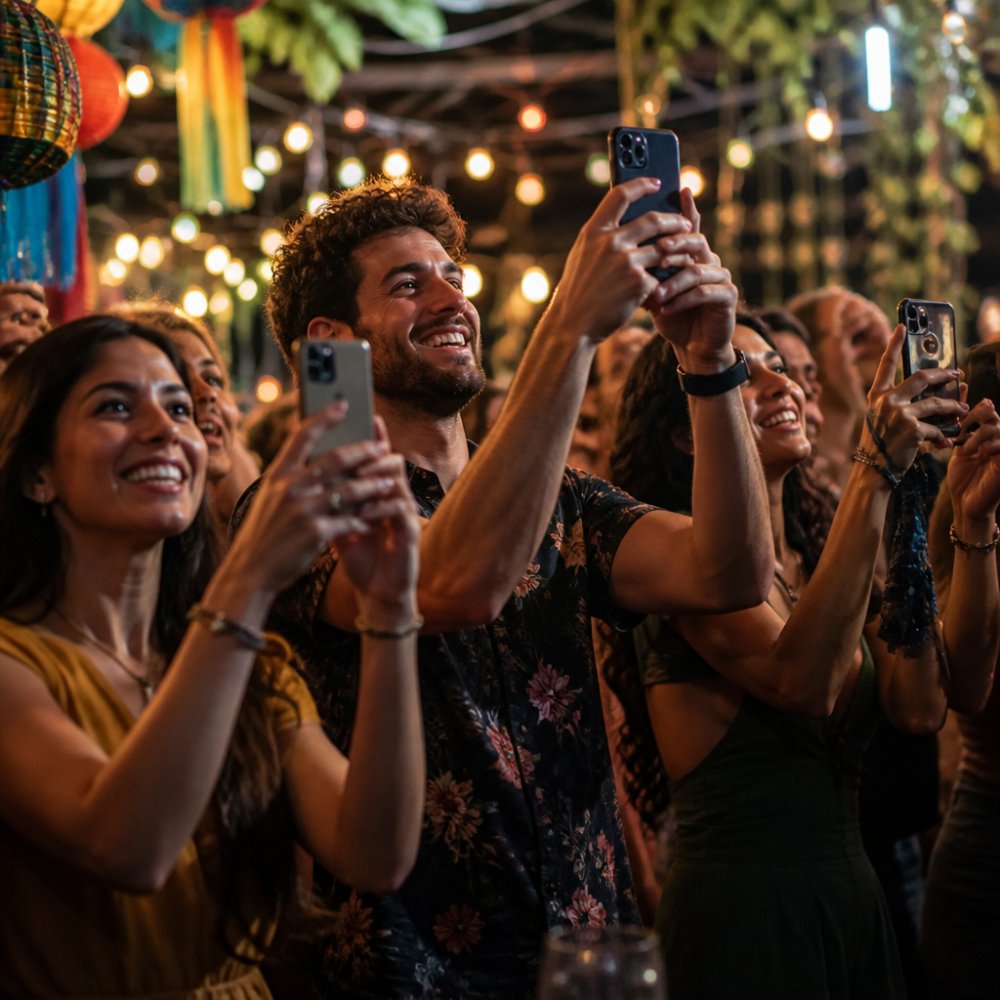
Event photo platforms transform passive attendees into active contributors. Instead of watching from the sidelines, guests become part of the storytelling. This shift in engagement has real effects on how people experience the event and how they remember it afterward.
When guests know their photos will be featured in a shared gallery, they participate differently. They look for interesting moments, frame shots more thoughtfully, and feel invested in the event’s documentation. This creates a sense of community and shared ownership that passive attendance doesn’t generate.
The engagement extends beyond the event itself. After the event ends, guests return to the gallery to relive moments, comment on photos, and share their favorites. Some platforms include features like photo voting or featured-photo selections, which keeps the community engaged long after the event concludes. This extended engagement deepens connections between attendees.
For corporate events and team celebrations, this participatory approach builds camaraderie. Employees see themselves and colleagues captured through different lenses, creating a more complete picture of the event than any official photographer could deliver alone. The shared gallery becomes a team asset, a record of culture and connection.
4. Powerful Marketing and Social Media Content
Every photo uploaded to your event gallery is potential marketing material. Instead of relying solely on professional photography, you gain access to dozens or hundreds of authentic, user-generated images. These photos are goldmines for social media, website updates, and promotional campaigns.
User-generated content performs better on social media than branded content. Guests are more likely to share photos they took themselves, which extends your event’s reach organically. Their networks see the images, and the event gains visibility far beyond the attendee list. This amplification happens automatically when you make sharing easy.
For businesses using events as marketing tools, this is critical. A wedding venue, event space, or corporate brand can repurpose guest photos across Instagram, website galleries, and advertising materials. The images feel authentic because they are authentic. They show real moments, real reactions, and real experiences rather than staged professional shots.
The volume of content also matters. A professional photographer might deliver 200-300 edited images. An event photo platform with 150 guests uploading might collect 500-1,000 photos. That abundance gives you options for different campaigns, different platforms, and different messaging. You’re not limited by a single photographer’s perspective.
5. Building a Shared Event Photo Album
A shared event photo album serves as the definitive record of your event. It’s the place where everyone knows to find photos, where memories are preserved, and where the story of the event lives. This centralization has practical and emotional value.
Unlike scattered photos across social media or personal devices, a dedicated album keeps everything in one coherent narrative. Guests can browse the full event arc: setup, key moments, celebration, and wind-down. They can search for specific people, moments, or details. The album becomes a reference point that wouldn’t exist otherwise.
For long-term value, a shared album matters enormously. Five years from now, when you want to revisit your wedding or corporate event, you won’t be hunting through old phones or asking friends for copies. The album is still there, organized and accessible. This permanence is something casual social media sharing can’t guarantee.
Many platforms allow you to customize the album’s appearance, add captions or descriptions to photos, and even create themed collections within the main gallery. Some let you print the album or create a physical book, turning digital memories into tangible keepsakes.
6. Privacy and Security with Private Photo Sharing for Events
Privacy concerns are legitimate when sharing photos online. You want your event’s photos accessible to guests and organizers, not exposed to the broader internet. Private photo sharing for events addresses this directly by keeping your gallery restricted and secure, but the details of how matter more than the marketing claim.
The legal frame you are actually operating in. If your event takes place in Germany, photos of identifiable people are personal data under the Datenschutz-Grundverordnung (DSGVO, the EU GDPR as applied nationally) and the Bundesdatenschutzgesetz (BDSG). A photo of a guest is not a neutral file; it is a processing operation with a legal basis, a purpose, and a retention limit. The relevant supervisory authorities, the Landesdatenschutzbeauftragten and the Bundesbeauftragte für den Datenschutz und die Informationsfreiheit (BfDI) at federal level, have repeatedly stressed that consent must be informed, specific, and revocable. The DSK (Datenschutzkonferenz), the joint body of German supervisory authorities, has published guidance on photo and video recording at events that most organizers should read before setting up a gallery.
What that means in practice for a photo platform:
- Consent capture at the point of upload. A checkbox buried in terms and conditions is not enough. The guest should see, in plain language, what the photo will be used for (shared gallery only, marketing, print), who can see it, and how to withdraw consent later.
- Purpose limitation. If you collected photos for a private guest gallery, you cannot later repurpose them for advertising without a separate basis. This is a common trap for venues and corporate event teams.
- Retention and deletion. DSGVO Article 5(1)(e) requires storage no longer than necessary (Principles of the GDPR). A platform that keeps every gallery indefinitely by default is not compliant by design; you need a defined retention window and a working deletion process.
- Access controls. Password protection, invitation-only links, and per-guest permissions are the minimum. Better platforms support role-based access so a photographer, an organizer, and a guest see different things.
- Rights of the depicted. Anyone in a photo can request access, correction, or erasure. The platform must make that request path findable, not theoretical.
Where platforms differ. Generic cloud photo services often store data outside the EU, apply unclear sub-processor chains, and offer no per-photo consent record. Platforms built for events increasingly offer EU-hosted storage, a documented Auftragsverarbeitungsvertrag (AVV, the data processing agreement required under DSGVO Article 28), and audit logs of who accessed what. Ask for the AVV before you upload anything sensitive, a provider that cannot produce one is not a serious option for a German event.
Before uploading photos of guests, confirm three things in writing: where the data is hosted, whether an AVV is in place, and what the default retention period is. If any of the three is vague, treat the platform as unsuitable for events with identifiable attendees.
For sensitive events, private family celebrations, corporate gatherings with external clients, anything involving minors, this privacy layer is not optional. Guests upload more freely when they trust the gallery, and organizers avoid the reputational and legal exposure that comes from a leaked or misused image set.
7. Measurable Results and Long-Term Photo Access
Event photo platforms provide data you can’t get from scattered uploads. You can see how many photos were uploaded, who participated, which moments were most photographed, and how the gallery was used over time. This data helps you understand what worked and plan better for future events.
The metrics available vary by platform. Some show upload activity over time, participation rates by guest, or trending photos. This information is valuable for event organizers who want to understand what resonated with attendees. Did most photos focus on specific moments? Which guests were most active contributors? These insights inform future event planning.
Long-term access is another measurable benefit. Unlike photos that disappear after an event or get lost in phone backups, a dedicated gallery remains accessible indefinitely. This creates a lasting asset. Your event isn’t just a memory; it’s a documented, organized, searchable record.
For businesses, this translates to ongoing marketing value. A corporate event from two years ago can still provide fresh content for social media, employee communications, or recruitment materials. The photos don’t age the way printed materials do; they remain accessible and relevant.
Choosing the Right Wedding Photo Collection App
Selecting an event photo platform depends on your specific needs. Consider the size of your event, your privacy requirements, and whether you want additional features like editing tools or social sharing options.
For smaller events under 50 guests, a simpler free or low-cost option often suffices. If you’re hosting 100+ guests and expect heavy photo participation, look for platforms that handle high upload volumes without performance issues. Privacy-conscious events benefit from platforms with strong encryption and clear data policies.
The best choice aligns with your event type and priorities. A wedding has different needs than a corporate conference or family reunion. Some platforms specialize in weddings, others in corporate events. Evaluate based on what matters most to you: ease of use, privacy, storage duration, or advanced features.
| Feature | Best For | Key Consideration |
|---|---|---|
| QR code sharing | Large events with diverse guests | Maximize participation without app barriers |
| Private access | Sensitive or exclusive events | Ensure only intended people view photos |
| Long-term storage | Events you want to revisit years later | Confirm how long platform keeps photos |
| Social sharing | Marketing-focused events | Balance privacy with promotional reach |
| Editing tools | Events where photo quality varies | Improve consistency before final collection |
Frequently Asked Questions
What is an event photo platform and how does it work?
An event photo platform is a digital service that allows guests to upload, share, and organize photos from an event in one centralized location. Guests typically scan a QR code or click a link to access the shared event photo album, then upload images directly from their phones. The organizer can view, download, and manage all photos in real time, eliminating the need to chase people for pictures or collect them from multiple messaging apps.
How can a wedding photo collection app help capture more guest photos?
A wedding photo collection app removes friction from photo sharing by making it as simple as scanning a QR code. Guests don’t need to download a separate app or remember to email photos later. The easier you make participation, the more photos you’ll receive. Many platforms also send reminders during the event and allow multiple uploads, encouraging guests to share candid moments throughout the celebration rather than just formal shots.
Is private photo sharing for events secure and compliant with privacy laws?
Reputable event photo platforms prioritize guest privacy and data protection. Look for services that offer password protection, limit access to invited guests only, and comply with data protection regulations like GDPR. Hosts should always obtain consent before uploading any guest photos and clearly communicate how long photos will be stored. Check the platform’s privacy policy and data retention terms before signing up to ensure your event and guest information remain secure.
Can I access photos from my event long after it ends?
Most event photo platforms allow you to download and store photos after the event concludes. Some offer extended access periods ranging from 90 days to one year or longer, while others provide permanent storage. Before selecting a platform, confirm the photo retention policy and whether you can download all images for your own backup. This ensures you can relive memories and repurpose event photos for anniversaries or future marketing without losing access.
Event photo platforms transform how you capture, organize, and preserve event memories. They replace the chaos of scattered uploads with a centralized, secure, and engaging system. Whether you’re planning a wedding, corporate gathering, or family celebration, the right platform makes participation effortless and creates a lasting record that guests can access and enjoy for years. Start with a free option to test the workflow, then upgrade if you need advanced features for your specific event.